Showing posts with label pawpaw. Show all posts

Tuesday, October 1, 2013

Pick up some paw paws


It’s pawpaw season, friends. That means it’s time to find those prized fruits and enjoy them. For me, it means turning the fruits into puree that I can freeze and use this winter.

But let me not get ahead of myself. I do tend to get so excited about paw paws that I forget what’s first. So first, you should know it’s the largest fruit that’s native to the United States. It grows in the eastern part of the country on trees. They grow in the wild or can be cultivated. When the fruit is ripe depends on where you are and the summer’s weather. In Kentucky, you can generally find them from late August through early October.

The second thing you should know is that when they are slightly soft (they give a little) they are ripe. You can cut the fruit down the middle and pull out the large, black seeds. Eat them and they will make you sick. However, eat the luscious pulp and you’re in for a vitamin and anti-oxidant treat that will make your taste buds dance with delight. The taste varies from fruit to fruit, but tends to be a sort of banana, peach, mango taste with a texture similar to that of an avocado.

Third, know that the ripe fruit is quite sweet. That, plus its texture, means it can work well in some baked goods, like muffins and breads. That also means that if using it instead of another fruit, like a mashed banana, you might want to cut down on the sugar. And what’s better than a natural sweetener? For me, something natural and healthy is a choice way to satisfy my sweet tooth.

Every time I puree another batch of paw paws, I foresee winter days of creating new treats for us to try. I simply cut open the fruit, use a spoon to get out the pulp and to separate away the seeds, then put it into my blender to puree. I measure it and put into snack-bag (I cup) and quart (2 cups) freezer bags. Nothing else in my freezer has the same yellowish-orange color.

My husband and I have been splitting paw paws to eat because the fruit is so rich I can’t consume a whole one on my own. I’ve also made us ice cream and smoothies, in which I also added raspberries since they’re ripe. Here are two recipes you can try.

Paw Paw Ice Cream (with thanks to the folks at the KentuckyState University Paw Paw Research Program. (Other recipes available on their site.)

2 cups whole milk
2 cups cream
¾ cup paw paw puree
1 heaping cup sugar

Mix and pour into your ice cream maker then wait for the fabulous result.

Paw Paw Raspberry Smoothie

¼ cup paw paw puree
¼ cup raspberries
½ cup plain yogurt

Blend and enjoy, or chill first if you like.

Monday, February 20, 2012

Pawpaw goes political . . . sort of

Those of you who have been following my blog know that I fell in love with Kentucky’s native fruit—the pawpaw—this past year. The luscious pulp of this sweet fruit can be used in so many ways for any course of a meal. It’s also a nutritional powerhouse.

So when Dr. Kirk Pomper of Kentucky State University (home of insightful pawpaw research and experimentation) asked me to share some news about the pawpaw, I said, “Of course.” This time around, he’s encouraging people to contact Representative Derrick Graham to support a resolution that would call for the papaw to be named Kentucky’s State Native Fruit Tree. The resolution cites its historic, economic and environmental value and legacy to the Commonwealth. If you want to support this effort, call 1-800-372-7181 to leave your message.

And mark your calendar now. Pawpaws will begin ripening in late August or September.

Saturday, January 28, 2012

Tasting Summer in January

One of the beauties of preserving garden produce is that you have the opportunity to enjoy a bite of the season gone by even when your garden is resting. That’s what we did last night with a group of friends.

I decided it was time to start digging into the freezer to see what I had preserved to add some summer sunshine to a winter day. I found frozen yellow squash and pawpaw puree that I wanted to use. I also pulled a jar of our canned tomatoes from the shelf, garden carrots from the fridge, sweet potatoes from the basket and fresh parsley from under the grow light and went to work. Here’s the menu I came up with.

Italian Squash Soup
European Peasant Bread
French Lentil Salad
Sweet Potato Fries with Avocado Dip
Panko Crusted Salmon
Pawpaw Sour Cream Pie

I prepared the pie the night before so it could sit in the refrigerator for 24 hours before serving. The bread, which mixed white, whole wheat and rye flours, I put together during my Friday lunch break. Everything else I began preparing 2 ½ hours before I expected our guests.
The result? The smiles around the table and the requests for seconds told me the meal was a hit. Here are two of the recipes you can try.

Italian Squash Soup (adapted from Neal Brown’s recipe)
2-3 cloves fresh garlic
1 lb. cubed, frozen squash that is thawed
1 lb. cubed potato
1 small sliced carrot
1 jar tomatoes, crushed
16 oz. vegetable broth
¼ cup olive oil
1 tsp. sea salt
1 tsp. black pepper
1 tsp. dried parsley

Prepare potato and carrot. Heat olive oil. Add potato and carrot and sauté 5-10 minutes, until they begin to soften. Chop garlic and add to oil for one minute. Add remaining ingredients, cover and bring to boil. Reduce heat and simmer for 30 minutes.

Pawpaw Sour Cream Pie (adapted from Moosewood Cookbook, 1977)
Note: Most pawpaws are quite sweet so when cooking with them it’s important to taste them then decide if you should lessen the amount of sugar you add. This recipe has less sugar than the original. In addition, this pie is similar to cheesecake but not as firm; it’s very creamy.)

Crust:
1/3 lb. (1 package) crushed graham crackers
8 Tbs. melted butter
¾ tsp. cinnamon
dash of nutmeg
½ cup chopped, slivered almonds
Combine all ingredients and press into pie pan.

Filling:
¾ cup pawpaw pulp puree
12 oz. softened cream cheese
1/3 cup loosely packed brown sugar
t2 TBS fresh lemon juice
½ tsp. vanilla extract
¼ cup sour cream

Beat together well. Pour into crust. Cover and chill overnight.

Enjoy!

Tuesday, September 13, 2011

Plant your own pawpaw trees


As I scooped out pawpaw flesh from the fruits last night and put it into my food processer to puree and freeze, I thought about all I had learned over the weekend about growing the trees this wonderful fruit comes from. There are many fine points to learn that experienced growers can share. I’ll give you the basics. For more information, be sure to visit the Kentucky State University pawpaw page.

Dr. Kirk Pomper, Principal Investigator of Horticulture at KSU, presented the session on growing pawpaw trees. Remember that growing conditions vary geographically (some attendees were from Romania, the Netherlands and Canada) but you can learn how to adjust tree care for your local climate and soil conditions.

1) You can save seed from the pawpaw you buy. Do not let it dry out. Store it in moist peat moss or in a plastic bag with a damp paper towel in the refrigerator for at least three months before planting.

2) There are a few nurseries that sell seedlings if you prefer to start that way. Growers sometimes raise seedlings to sell, also, so if you find someone to purchase the fruit from, ask about the fruit tree.

3) Look for an appropriate site for the trees. Although they are shade tolerant and grow naturally in the forest, without sun the tree will be less productive. Once you select an area for planting, begin eliminating the weeds. An organic way to do this is through “solarization” in which you cover the area with clear plastic for one year to let the sun kill the weeds. Follow that with an organic ground covering such as hay or a nitrogen-fixing plant.

4) Test the soil for a pH between 5.5 and 7.0. The site should also have good drainage.

5) Dr. Pomper recommends spacing trees 6.5 feet apart in rows 18 feet apart. If planting at home, remember to leave adequate space around the plant but also keep in mind that you’ll need to mow around them.

6) During the first year of growing, the plant needs to be shaded for protection. Growers seemed to have some disagreement with this recommendation but there are tree shelters you can use if it sounds like something you want to try. I didn’t hear any disagreement about the importance of irrigation during the first two years.

7) Another important factor—fertilization. Organic growers say there are organic fertilizers available that work well.

8) Pruning is important. The pawpaw tree is tough (stands up against ice storms) but delicate (the wind can blow off a limb filled with heavy fruit). To strengthen the tree, Dr. Pomper recommends pruning. Pruning might result in waiting for a longer time for the tree to produce fruit, but the results can be better.

9) These trees seem to be relatively unharmed by pests and diseases. Leaf and fruit spot have been the most common problem KSU had identified. One way to diminish its occurrence is to clear away any fruit that drops onto the ground and rots.

Before planting, take note: pawpaw seedlings begin producing fruit in seven to eight years; grafted trees produce in five to six. So while you wait for your trees to grow, don’t lose track of your local pawpaw grower.

Monday, September 12, 2011

Tasting the pawpaws

Pawpaw Extravaganza Dinner
September 10, 2011
Kentucky State University
Appetizers:
Kentucky Freshwater Prawn Tails with Pawpaw Cocktail Sauce and Pawpaw Smoothies
Meal: Curried Pawpaw‐Butternut Squash‐Sweet Potato Soup
Hearts of Romaine Salad with Pawpaw Vinaigrette
Pork Loin Medallions with Sweet Pawpaw Sauce
Baked Kentucky Tilapia with Fresh Pawpaw Salsa
Roasted New Potatoes
Mixed Fresh Kentucky Vegetables
Dessert: Pawpaw Crème Brulee ‐ Courtesy of Chef Robert Perry, University of Kentucky Sustainable Agriculture & Food Systems Working Group
Pawpaw Ice Cream and Cookies – Courtesy of Master Baker Gary Gottenbusch, Servatii Pastries, Cincinnati, OH

That was the menu Saturday evening at The 3rd International Pawpaw Conference at Kentucky State University in Frankfort. The conference brought together scientists, growers, preservationists and sustainable agriculture aficionados to share information about pawpaw growing and marketing. Of course, you can’t talk about those things without also doing plenty of pawpaw sampling. Saturday night’s closing conference dinner provided opportunities for that.

Because of its creamy texture, pawpaw cooking works best when the pulp is removed from the fruit then pureed. Then it can be used in numerous ways, always retaining at least some of its unique, sweet flavor. Dishes prepared with pawpaws generally have a faint yellowish to orange color, depending on the amount of pulp used and the other ingredients added.


I began the evening with the Pawpaw Smoothie. I’m a smoothie fan so I knew I would like this version that was slightly sweet with a subtle pawpaw flavor. When we heard from the cooks later in the evening, we discovered the pawpaw had been mixed with a couple of other fruits in the smoothie. So if you want to try this at home, choose your favorite fruits and see what you get.

Since I’m not a prawn fan, I relied on Jim to rate the Pawpaw cocktail sauce. It was too sweet for his taste. It likely didn’t stand out because it was prepared from a bottled cocktail sauce to which the cooks added pawpaw puree.

Next we moved on to the meal. As a soup fan, I looked forward to the Curried Pawpaw‐Butternut Squash‐Sweet Potato Soup. I enjoyed tasting a pawpaw dish that wasn’t so sweet, thanks to the curry spices. Rather than a silky, smooth soup, this was thick and slightly chunky. Although the appearance wasn’t the most attractive, it tasted good and was a favorite of one person at my table.

I moved on to try the Pork Loin Medallions with Sweet Pawpaw Sauce. I’m not a big pork fan but truly enjoyed this dish. The sauce was good without being too sweet. This was the favorite of the three men at the table. The chef generously shared the recipe with me (below).

The next item I tried had the most colorful pawpaw mixture— Baked Kentucky Tilapia with Fresh Pawpaw Salsa. This was my favorite pawpaw dish of the evening. The salsa had the typical ingredients—red peppers, jalapeno, cilantro, a very smooth pawpaw. The flavor was excellent with the fish and I would definitely try this at home. One cook at my table said it was similar to the mango salsa she had made.

In between the pawpaw dishes I gratefully ate the vegetables and bread to try a little palette cleansing before I tasted the next item. I left the salad for last and must say the pawpaw vinaigrette rivaled the salsa and someone at our table chose it as her favorite. It was pretty, tasty, and according to the chef (Sheri Crabtree of KSU), easy to make. She mixed it with white wine vinegar, olive oil, salt and pepper and created something unique that I’ll definitely try to imitate.

I must admit that by the time dessert came, I had just about had my fill of pawpaw. Earlier in the day, I had tasted a “Pawzel,” a pretzel made of pawpaw. It reminded me of a bagel and was good with cream cheese. I had also sampled various types of pawpaws and eaten a pawpaw cookie. So when dessert came, I had already had my “sweet” allotment for a week. Still, I never turn down dessert.
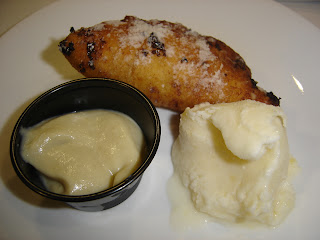

Typically, I don’t waste calories on dessert unless chocolate is included. There was no chocolate on the dessert plate, but it was still a nice ending to the evening. The Pawpaw Crème Brulee was really just Pawpaw Crème since it was served in plastic cups and couldn’t be torched. It had an odd, greenish cast to it (maybe because of the black cup) but it was silky, smooth, rich and good. I also enjoyed the ice cream with its mildly fruity flavor. The fried pie was a bonus thrown in by a KSU student who turned out to be a good cook. Just as he described, it was reminiscent of the fried pies you can find in various places in Kentucky, but this one had pawpaw in the middle of it.

Luckily, when I was in the hallway I met Eddie Reed, the Farm Manager who created the Sweet Pawpaw Sauce for the pork. He and Sheri Crabtree, KSU Co-Investigator of Horticulture, led the cooking crew for the evening. Here’s the recipe he shared.

Sweet Pawpaw Sauce
(This fed nearly 100 people, so adjust as necessary.)
8 cups pawpaw pulp
4 cups brown sugar
3 whole cayenne peppers
12 oz. peeled, roasted red peppers
4 tbsp. butter

Heat butter and sugar then add pawpaw pulp to warm. Add red peppers and boil. When boiling, split cayenne peppers and add. Simmer 1 hour then remove cayennes. Now you have sauce.
Eddie said he was hoping the sauce would have more bite to it, so you might need to adjust the cayenne usage if that’s what you’re hoping for.

On Tuesday, look for my post about how to grow pawpaws. And in the meantime, get your pawpaws now if you want to try cooking with them. In Kentucky they’ll be out of season in just a couple of weeks but you can scoop out the pulp, puree and freeze to experiment with one day this winter.

Thursday, September 8, 2011

Pawpaw news is coming!

I have just discovered the fruit of the gods—the pawpaw. Creamy, silky, sweet but not too much so. It is my new favorite fruit.

Since I met my husband, he has lamented that we don’t have pawpaw trees. Are you asking: pawpaws? What are they? I had never heard of them until I met Jim but they are so scrumptious that I want to learn. And it is pawpaw season!

A quick web search told me that they are native to the temperate woodlands of the eastern U.S. That includes Indiana, where I grew up, and Kentucky, where I now live. Another name for the pawpaw is the Hoosier Banana. It is the largest edible fruit native to America. Shaped liked a large egg, it can weigh five to 16 ounces. Its green skin turns black when ripe—much like an avocado which you peel the same way.

So what about the taste? I think it’s like a combination of a peach, mango and banana. This morning I was sucking off the pulp stuck to the large seeds because I couldn’t stand the thought of even a small bit of it going to waste.

During my web search, I discovered that Kentucky State University is hosting a pawpaw conference Sept. 9 and 10, concluding with a Pawpaw Extravaganza meal Saturday evening. Two days letter, I received an unexpected invitation to attend and cover it for this blog. You can bet I accepted that invitation. So look for a detailed report of what to prepare with pawpaws, along with photos, next week. In the meantime, see if you can find pawpaws where you live.