Wednesday, September 25, 2013

Grounded


Evelyn’s Pesto
When I return from a writers’ conference, as I did Saturday evening, I don’t immediately peruse my new writing ideas. I go to my garden.


Being away from my garden is like missing a favorite meal. I crave it until I’m checking in with the tomatoes and butternut squash to see how their colors have deepened and their size plumped. I push my fingers into the soil to feel the level of moisture. I pluck a raspberry and savor the sharp flavor on my tongue, then I fill my container. I also give thanks for this relationship I have with the particular piece of land God has entrusted to me.

And so today I think it’s fitting to share a recipe from a friend of mine who is a debut novelist. Grounded, by Angela Correll, takes place mostly on a farm where career-woman Annie is spending time with her grandmother, Beulah. Together, they garden and cook, among many other adventures. Learn more about Angela, her book and her recipes at her website. And cut some of your remaining basil for this recipe.

Evelyn's Pesto

4 cups of basil leaves (fresh)
3 cloves of garlic
1/2 cup of pine nuts
1 teaspoon of salt
3/4 cup italian parsley (fresh)
1/2 cup olive oil
1/2 cup of parmesan cheese

Put all ingredients into a food processor and process until mixed well. Freeze or eat fresh. Use as pasta sauce by heating and adding a bit of cream or as a seasoning for vegetables or soups.

Tuesday, September 10, 2013

Red and Blue Potato Salad is good picnic addition


It’s potato harvest season for those of us who kept potato bugs at bay and are now reaping the benefits of a good harvest. Because visual appeal is part of the whole package for creating an appealing meal, I’m thrilled to have white, red and blue potatoes to play with. In combination, they make an attractive color package. 

I’m never sure what to take to potluck gatherings because most of the dishes I prefer to serve are meant to be eaten warm. We were recently invited to a gathering of friends. Instead of challenging myself to keep something warm until mealtime, I decided to slightly alter a potato salad recipe I had tried. I substituted my red and blue potatoes for the Yukon golds and other garden-fresh vegetables such as—red peppers and carrots. Keep in mind that reds and blues have fewer carbs than white potatoes, which provides one of the nutritional benefits of this recipe.

If you’re enjoying a good potato harvest, try this Ina Garten recipe, sans lobster (as I did) unless you’ve just pulled in those lobster traps!


Tuesday, September 3, 2013

I intended to post a potato salad recipe today, but maybe I'll do that later this week. Instead, I'm participating this week in the Liebster Award. Groundwell Farm nominated me for this award and I like the idea, which is to thank the blogger who nominated you, answer the questions they pose and pose questions to a few bloggers (with hundreds rather than thousands of followers) who I nominate.

I'm thrilled that Groundwell nominated me. It's wonderful to be recognized by a blog that supports sustainability, something I've been working creatively to live. So thank you Groundwell for your good work and your recognition.

Now, to your questions:

1. What do you think about sheep?
Hmm. I'll be thinking about that one all evening because I haven't thought of sheep since I heard some in a barn and went to see them. They weren't interested in me; I didn't have food.

2. Identify your most unloved possession.  How did you acquire this thing?
A clock that hangs in our living room; it was a gift.

3. Why did you think you needed it?
 Because my husband likes it.

4. How did it disappoint you?
It makes me think of deer hunters and I know there are too many deer here, but I hate to think of them being killed.
 
5. What is your favorite gardening tool?
My small, hand hoe.

6. What got you started blogging?
I wanted to be accountable to myself as I worked to live from my garden.

7. What is the best way to build community?
Listen to one anothers stories.

8. When was the last time you grew something and produced a yield?
I've been doing it all summer.

9. Did you save seeds from your yield?
I saved my spring spinach seeds and planted them for fall.

10. The last time you entered the wilderness, what brought you there?
A desire for a peaceful place to walk.

Now, for the blogs I want to nominate:

Friends Drift Inn

Savoring Kentucky

Simply Nutritious

Now bloggers, for your questions:

1. What's the title of the last book you read?

2. What are you looking forward to this fall?

3. What's your favorite kitchen tool?

4. What's your favorite kitchen ingredient?

5. What have you never grown that you would like to try to grow?

6. Where did you go on your favorite vacation?

7. How do you stay optimistic when you're having a hard time of it?

8. What do you like about the changing in seasons?

9. If you could be a guest on a radio or television show, which show would you choose?

10. What will you do when you finish answering these questions?

Go Liebsters!

Tuesday, August 27, 2013

How long will you garden this year?


I’ve heard more people than usual talk about putting their gardens to bed early this year. We’ve had so much that gardeners have lost tomato plants to root rot. My tomatoes aren’t producing like usual, but the garden is still producing.

Unless there’s a weather disaster, I typically harvest fruits and vegetables through October, sometimes even into early November. Here’s a tour of the garden this week with a few thoughts on the longevity of each plant.
Come to my house and plants will greet you as you walk up the steps to our kitchen door. The basil (bottom) will last until first frost. I’ll bring it indoors before first frost, or put it in the greenhouse, but it seldom does well after summer. Next are the Gerbera Daisies. They are one of my favorite flowers because of their vibrant colors. They’ll live inside during the winter and even bloom every few months if they get enough light. My goal is to keep them through the winter so I can put them out again next year. At the top you see the Angel Wing Begonia. I’ve tried to keep it inside over the winter but it gets gangly. If you have a tip for how to prevent that, let me know!

Our peaches didn’t do so well this year. The problem was a double one—too much shade from a still-growing tulip poplar tree and too much rain. We are getting a few small fruits and they won’t last more than another week or two. The tree grew from a peach pit thrown into our yard so we’re happy with anything we get from this unexpected addition to our garden.


I picked about two-thirds of our beans over the weekend. I like growing beans to dry then store over the winter. This year I grew our typical Pinto Beans along with two experiments—Pawnee Shell Beans and Hutterite Beans. I’ll give a taste report on the last two when I try them. The rest will be dry enough to pick within the month.
I don’t know how long the tomatoes will last. These San Marzanos are the happiest in the bunch right now. I do have seven plants elsewhere in the yard that came up as surprises from last year. They all still have green tomatoes and didn’t get as much rain so perhaps they’ll produce longer.

In the foreground are the nasturtiums, which have grown abundantly this year. They should last until late September or October. Behind them is the perennial Mountain Mint (with the white flowers) that I rub on my skin to repel mosquitoes. It will be okay until a hard frost.

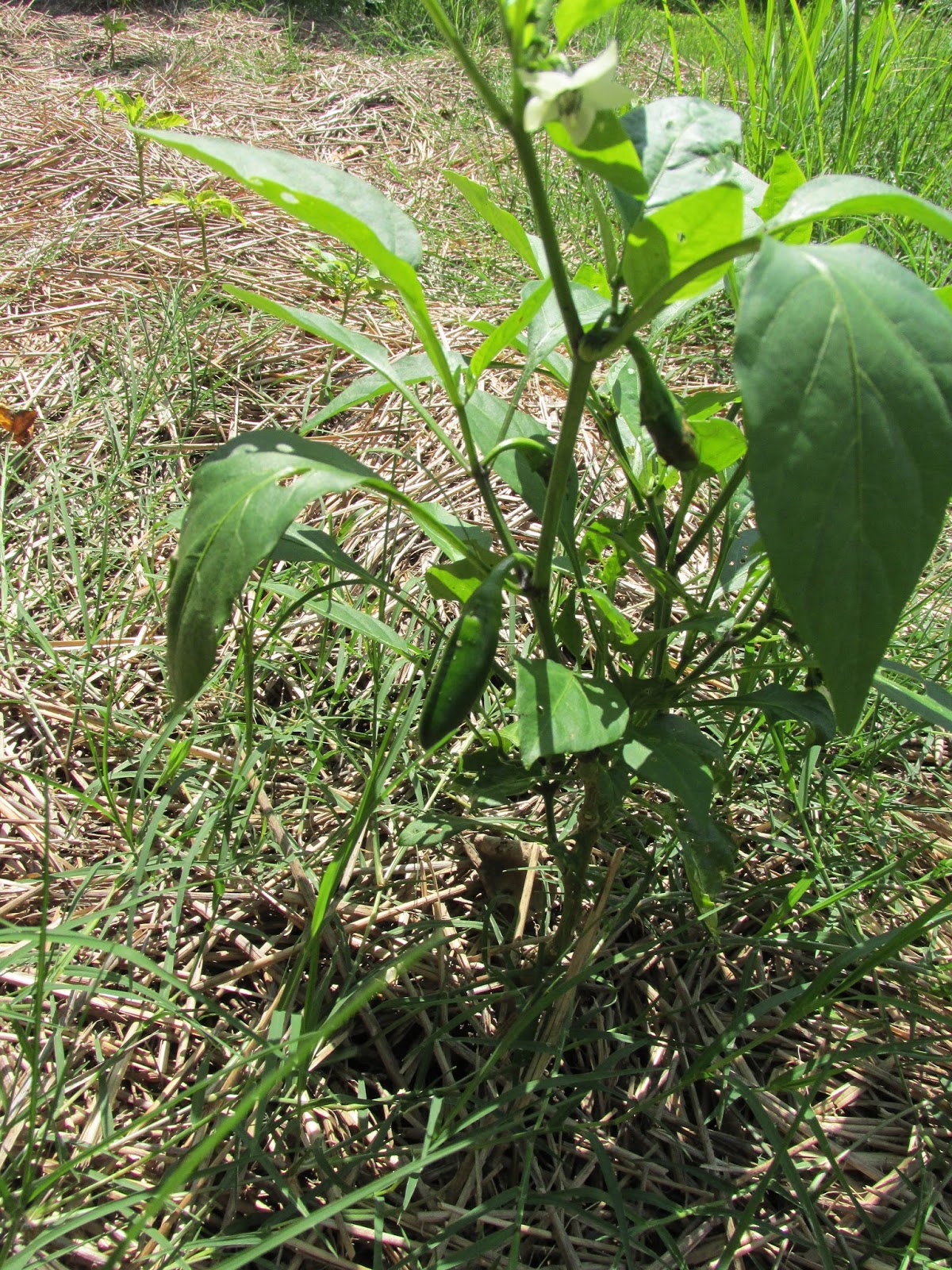
My peppers did poorly this year, another victim of shade and rain. They usually last until first frost and sometimes past then if I cover them.


The Swiss Chard has been abundant this year and will produce throughout the fall. That makes me happy because I do love chard.


The kale also continues to flourish, giving me abundant opportunities to experiment with this healthy veggie from the cruciferous family.

Yes, we have a walnut tree. Our best walnut harvest was when a local man collected our walnuts, and what fell into the neighbor’s yard, took them for processing then brought us a package of ready-to-use walnuts as payment. I hope he shows up again this year because I’m happy for someone else to do the work and keep a portion of them.


The miniature eggplant has done well. Will we get another harvest of it this year? Stay tuned. I’m still relatively new with this fine vegetable so I’m learning. It has produced several nice fruits in two harvests so far.


Raspberries, lovely raspberries. The rain has made them plump. They usually give us fruit until first frost.

 Here’s the year’s experiment—squashplanted in straw bales. Zucchini, Delicata and Butternuts are growing. Will the winter squash plants produce before frost? I’m not sure but I am hopeful.
We get a few grapes in lucky years. It’s not that they don’t produce; the wildlife usually get to them before we do. This year, the cardinals have been chirping happily as they eat.

What’s growing in your garden now?

Tuesday, August 20, 2013

Kentucky Fajitas


My spring and summer days have gone into planting, weeding, watering, harvesting then eating or preserving. Yes, in my absence from the blog I’ve been doing what I write about –enjoying the goodness of the garden. I hope you’ve been doing the same.

I return today with last night’s meal. Anyone who’s been in a Mexican restaurant has smelled the sizzling fajitas as the onions and spices waft through the air on a trail of steam. The server delivers the tempting plate to a neighboring table and I sometimes wish I had ordered it. 

Fajitas are one of those dishes that easy to prepare at home, especially if you have leftover fried chicken. My husband is the fried chicken king. He generously cuts the breast portions in half so I have smaller pieces that are more appropriate for my appetite. If only the two of us partake of the chicken, I have plenty for leftovers for the upcoming week. So I return to my blog with Kentucky Fajitas, created with Jim’s fried chicken and vegetables from the garden.

Kentucky Fajitas
1 red bell pepper
1 small onion
1 small zucchini
1 carrot
a handful of Swiss chard
2 cloves of garlic
1 TBSP olive oil
salt, pepper, oregano and cumin to season
favorite salsa, cheese and tortillas

Slice first four vegetables into small sticks. Heat oil at medium heat in skillet. Add veggies and a little salt. Warm chicken in toaster oven. (You can also use a microwave or the skillet, but I find a toaster oven keeps it moist and doesn’t heat up the house tremendously, a benefit in warm weather.) Chop chard until you have 1 cup or so. Chop garlic and add to veggies. When veggies are nearly as soft as you want, toss in the chard then add a sprinkle of the remaining seasonings, except salsa. Turn veggies to low and check on chicken to see if it’s heated through.

Grate cheese. I use whatever I’m in the mood for and have in the house. Sometimes I like the crumbly, white Mexican cheese. Then I get on a Swiss cheese kick or only have cheddar in the house. Last night I used marble cheese.

I also alternate tortillas. I prefer corn tortillas, which have more flavor and fewer calories. Sometimes I also use whole wheat tortillas. Either kind will warm well in the microwave for 10 – 20 seconds or in a warm skillet.

With everything warm, I chopped the chicken into slices then laid out one whole wheat tortilla and one corn tortilla. The whole wheat tortilla was larger, so I put in a layer of cheese, veggies, chicken, salsa (we make our own) and more veggies. The corn tortilla is smaller so I filled it with just a little cheese, veggies and chicken. 

The result? When I return from our favorite Mexican restaurant, I drink lots of water. Their flavorful food is high in salt. Not so for our home-grown and prepared Kentucky Fajita. So try your own and enjoy the goodness of your own garden.

Wednesday, March 20, 2013

Experimentation season begins


Every year, my gardening adventures include at least one or two experiments. I learn and adapt my approach as needed for better future success. This year I’m incorporating lessons from past gardening seasons and trying a few new tactics.

Greenhouse growing
We received a small, plastic-covered greenhouse as a gift a few years ago and enjoyed it immensely. It turned out to be a wonderful location for growing our seedlings to planting size. We also sprouted some of the seeds in the greenhouse once the weather warmed. Plus, on the cooler days, one of my joys was walking into that warm greenhouse.

However, our greenhouse only lasted two years. We originally placed it too close to the edge of our garden where Jim ran over a piece of it with the mower. Once the plastic ripped in one place, no amount of taping repair could keep the rip from growing and replicating in other places.

This time, we’ve placed the greenhouse further into the garden. When we no longer need it for spring growing, I can take it down to spare it standing in summer weather it doesn’t need to endure. Then I can put it up once again when I need it for the fall. Since it doesn’t take more than 30 minutes to assemble, once I know what I’m doing, it isn’t a big job to re-locate it.

There are seedlings in it right now and on sunny days I need to raise the door flap for awhile to cool it off. The herbs, cabbage and broccoli inside look happy, just as I am when I enter that warmth.

Vegetable choice
Two weekends ago I was thrilled to spending one of my sunny weekend days planting seeds in the garden instead of working inside my heated house to fill pots with soil and seeds. I made spaces for spinach, kale, kohlrabi and rutabagas. One of the spinach varieties (Dolce Vita) is new to me and I’ve never even eaten a rutabaga, much less grown then. When they sprout, I’ll need to find photos of what the leaves are supposed to look like to I don’t weed out the actual plants, a problem I had the first year I tried to grow jicama. If my experiment makes it to the harvest stage, I’ll also be searching for recipes for this root vegetable.

Lasagna gardening
Three months ago we built a “lasagna garden” bed on one-third of our garden. After laying out the cardboard, we covered it with compost topsoil then straw. Now it’s time to begin planting there.

My plan for this year is to use it for seedlings rather than seeds; I assume the straw layer would prohibit germination. So I’ve started with a few cabbage, brussell sprout and onion plants. When I first separated the straw to find the soil into which I could plant the onions, I was surprised at how difficult it was to work through the straw. Eventually, however, I found a good routine and became less fearful of moving some of the straw so it would be easier to make a space for the plant. So far, everything looks happy.

Experimentation adds fun to my gardening adventure. What experiments are you trying in this year’s garden?